Etna 3300 Hike
Summit experience: walking on the rim of Sicily's most ancient force
- 5-6 h
- Hiking
- Hard
- Summit Area
- 3300 m
- 10-12 Km
- +500 m / -800 m
In Focus
High-altitude volcanic trek: A demanding Etna hiking experience designed for fit hikers seeking the highest trekking zone accessible under official safety regulations
Cable car & off-road ascent: Reach the upper slopes efficiently by combining the Etna cable car 4×4 vehicles, preserving energy for the most spectacular part of the hike
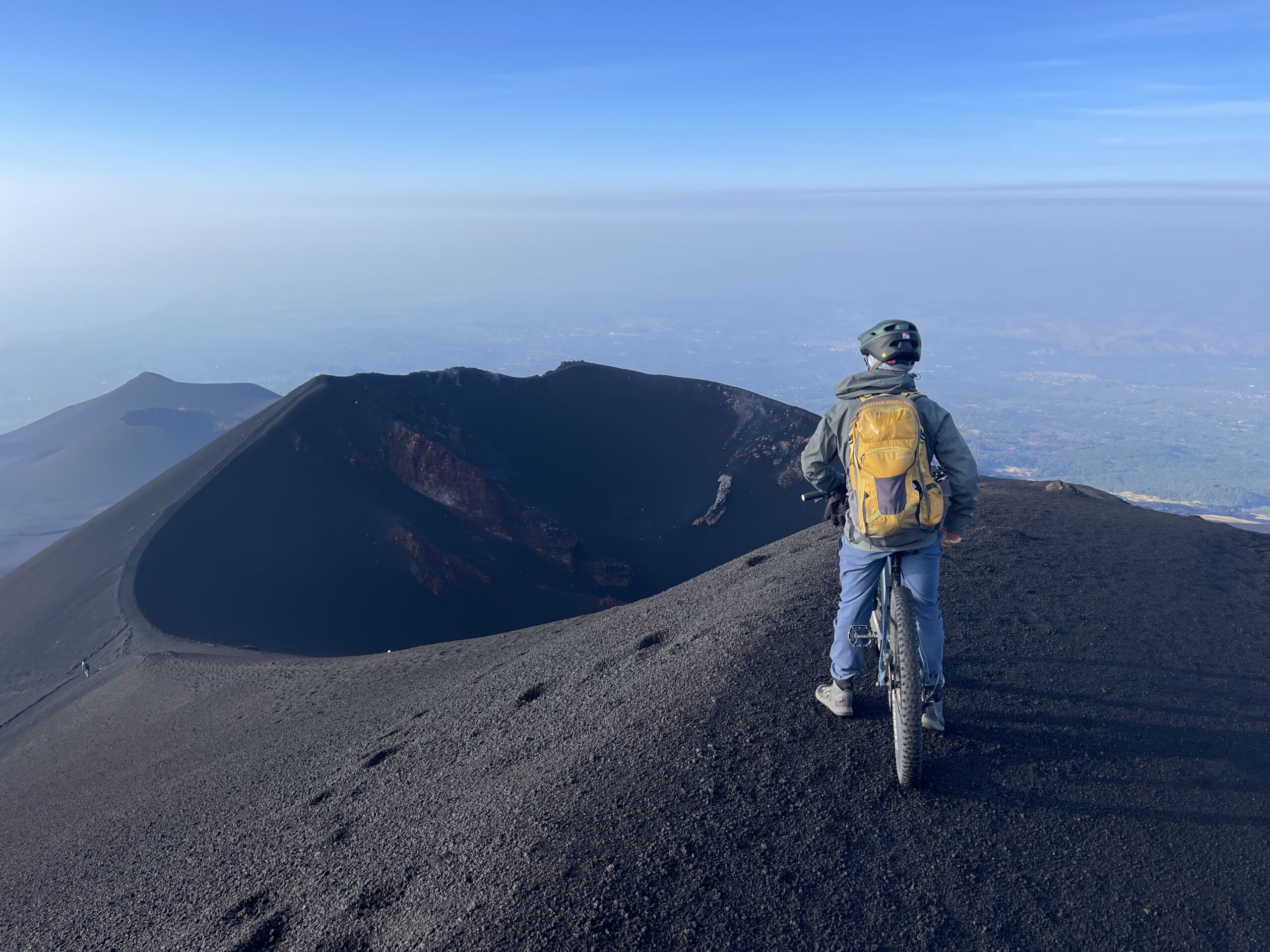
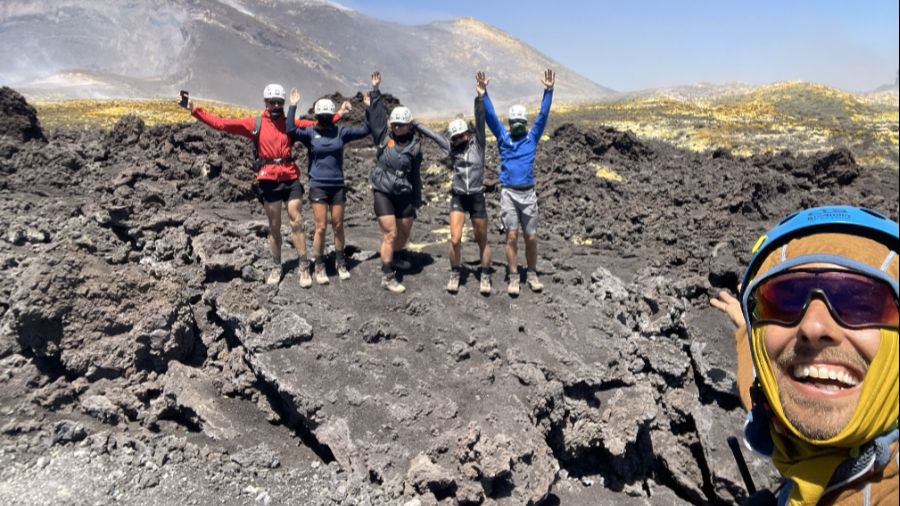
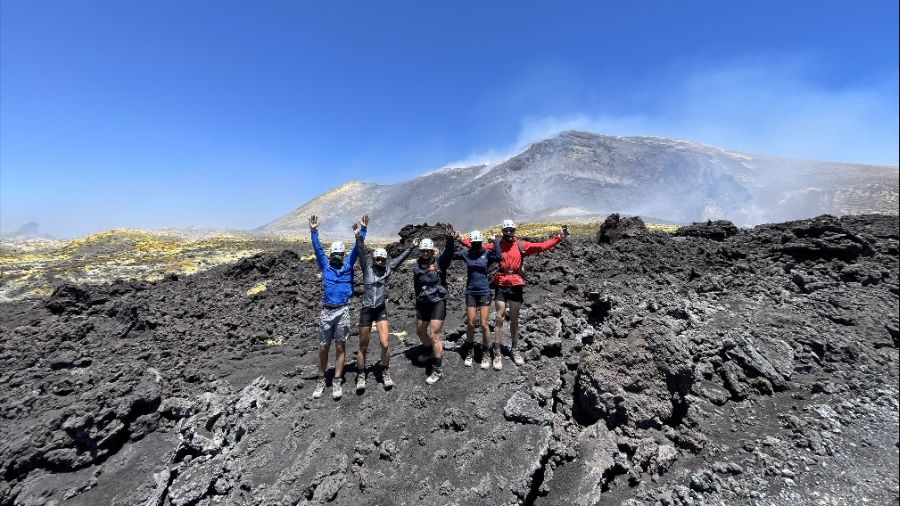
Summit-zone landscapes: Walk across ash fields, lava plates and unstable volcanic terrain shaped by major eruptions, in an environment that feels raw, vast and constantly evolving
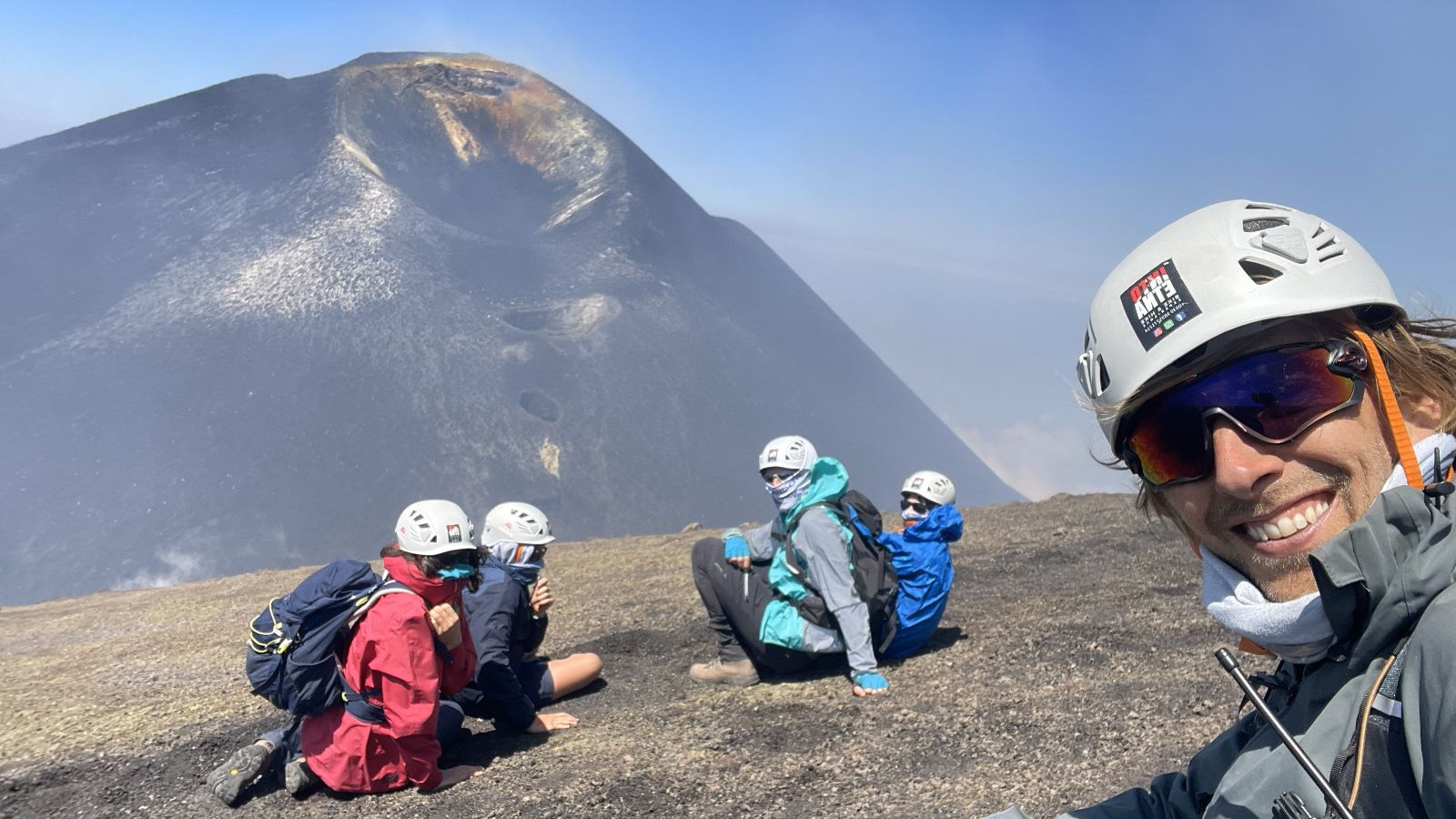
Eruptive structures & lava formations: Explore scoria cones, eruption scars, lava tunnels and fracture systems formed during the most recent eruptive cycles
Remote routes & controlled access: The itinerary follows less-frequented sections of the volcano, far from mass tourism, for a deeper and more authentic encounter with Mount Etna
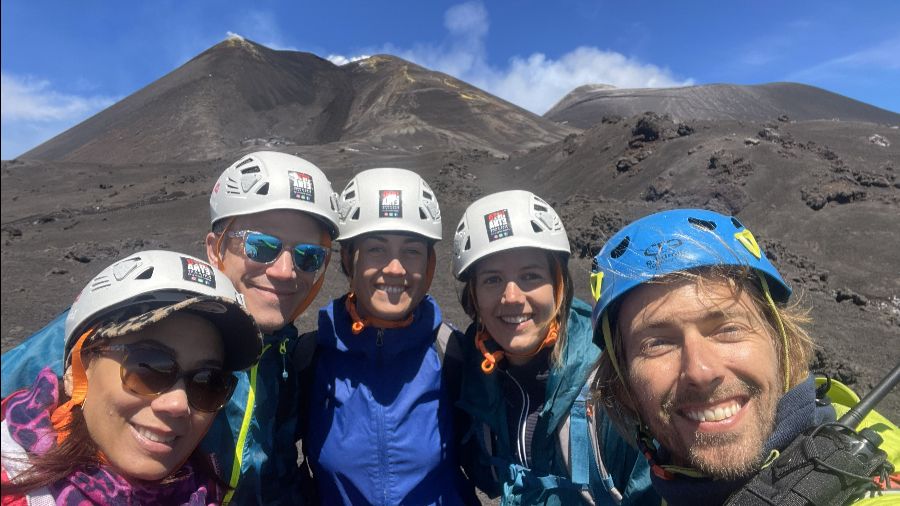
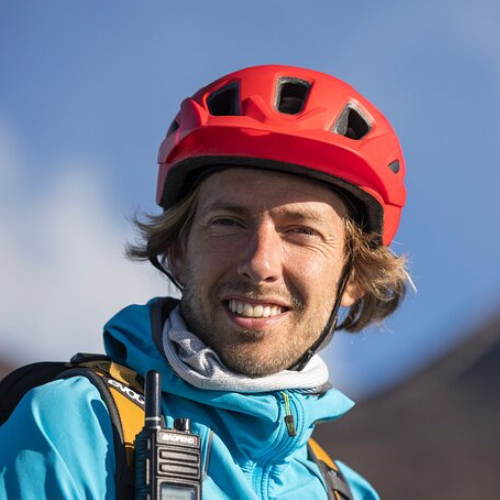
Volcanology experts on route: Certified volcano guides lead the hike, explaining geological processes, eruption history and current volcanic dynamics while ensuring safety at high altitude
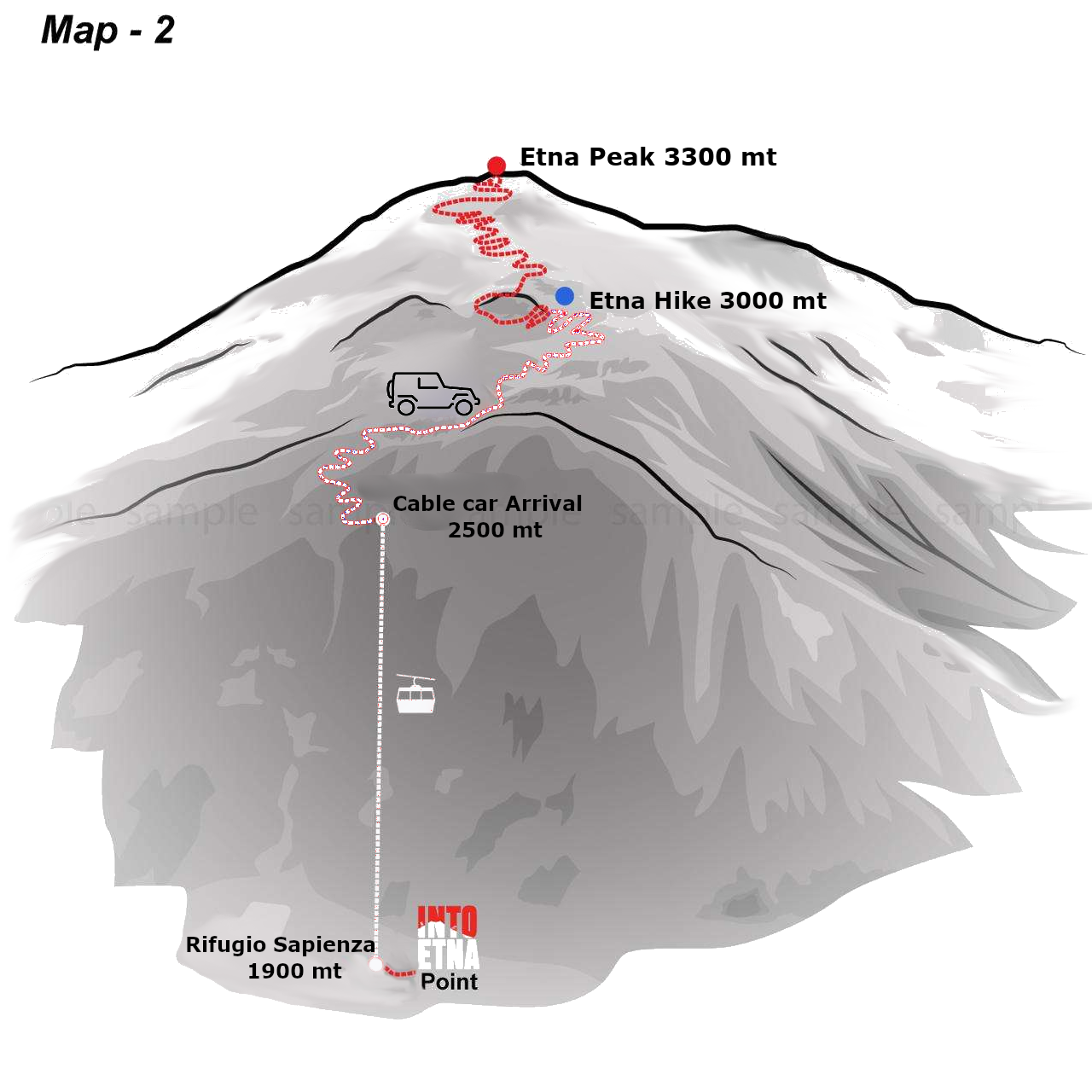
10:00 — Meeting point
Welcome, clothing check, equipment distribution.
Briefing
Safety, route, pace, volcanic conditions.
10:30 — Cable car ascent
Up to 2,500 m.
4×4 transfer
Up to 2,850 m.
11:30 — Trekking Begins (2850 m)
Start hiking upward from the 4×4 arrival point. Initial trail crosses the Barbagallo’s Craters area (2002–03 eruptions). Walk on black lava sand past volcanic bombs. Guide explains crater formation and history. Continue uphill along switchbacks on mixed ash and rocky terrain.
12:00 — Torre del Filosofo area (2920 m)
Reach Torre del Filosofo, once it used to be a refuge and an observatory for the summit area.
12:30 — Final Ascent (2920–3300 m)
Resume climb for the final ~400 m elevation gain. Steeper slopes, gravelly cinder cones, unstable ash. Helmets on approaching summit craters.
13:30 — Summit Craters (~3300 m) – Arrive at summit area
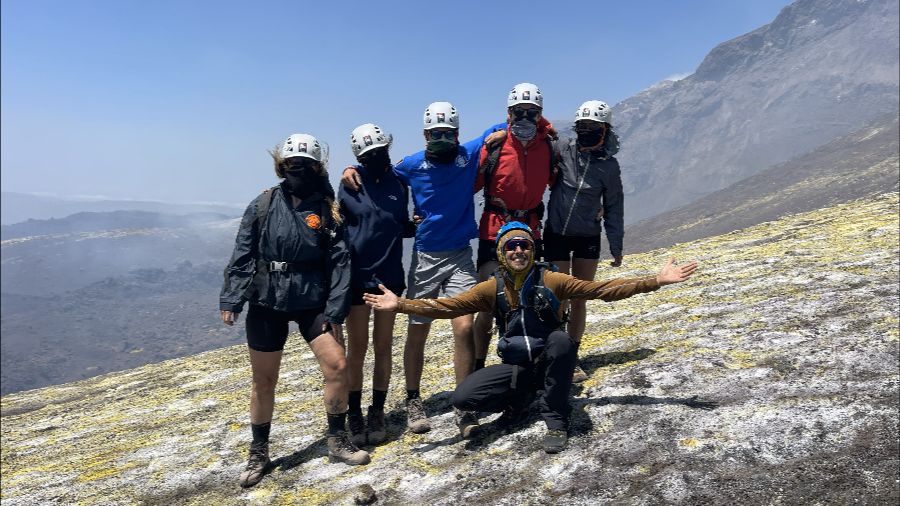
Walk carefully towards the Top of Mount Etna (conditions permitting). Summit time: ~20 min. Observe vents, fumaroles, yellow sulfur deposits, panoramic views of Sicily. Take photos and learn about Etna’s current activity and last eruptions. Smell sulfur near active vents. Group moves slowly and steadily for safety.
14:00 — Descent from Summit
Begin descent on southern slope. Soft pyroclastic sand allows sliding/skimming. Group stays close to guide, occasional stops for regrouping and photos.
15:30 — Back to Cable Car / 4×4 Arrival Point (~2500 m)
Arrive at the upper cable car / 4×4 drop-off point. Remove helmets, dust off gear.
Cable car / 4×4 ride down to Rifugio Sapienza.
16:00 — Return to Rifugio Sapienza
Arrive at base station. Return any borrowed gear (helmets, poles).
Reminder: Exact times are flexible to accommodate queues, group readiness, and volcanic safety conditions. Safety and group cohesion always take priority.
Duration: Approximately 6/7 hours
Distance: 10–12 km
Difficulty: High (★★★★☆)
Elevation Gain: +500 m / −800 m
Maximum Altitude: ~3,300 m
Season: May – November
A high-altitude trek reaching Etna’s summit zone. The route crosses lava fields and volcanic ridges, requiring good physical condition and adaptation to altitude. Conditions and itinerary are adjusted according to volcanic activity.
Start
Meeting Point: Central parking lot at Piazzale Sapienza, Etna South
Large paid parking available on site
Nearby bars for lunch/snacks and restrooms
Short briefing with certified volcanic guide
Walk together to cable car station
Hiking officially begins at 2,850 m
Transport Used:
Cable car from base (~1900 m) to ~2500 m
4×4 vehicles from cable car to upper trail start (~2850 m)
Return:
Planned via cable car down to ~1,900 m
If cable car is not operating, descent on foot, back to parking area
Optional:
Private pick-up & drop-off available on request
Contact during booking or via WhatsApp/email:
📩 booking@intoetna.com
We manage logistics — you focus on the adventure
Who is it for:
Etna 3300 Hike is designed for hikers in good physical condition who are used to walking on uneven, sandy or volcanic terrain
Hikers with solid mountain experience, used to long ascents and uneven terrain
Physically fit and well-prepared participants, comfortable with sustained effort at high altitude
Adventure-driven travelers looking for a demanding and immersive volcanic experience
Guests motivated to reach Etna’s highest accessible zones on foot
People confident moving in active volcanic environments and changing mountain conditions
Not suitable for people with heart, respiratory or serious joint conditions. Any medical issues must be communicated in advance
Etna 3300 Hike is designed for hikers in good physical condition who are used to walking on uneven, sandy or volcanic terrain
Hikers with solid mountain experience, used to long ascents and uneven terrain
Physically fit and well-prepared participants, comfortable with sustained effort at high altitude
Adventure-driven travelers looking for a demanding and immersive volcanic experience
Guests motivated to reach Etna’s highest accessible zones on foot
People confident moving in active volcanic environments and changing mountain conditions
Not suitable for people with heart, respiratory or serious joint conditions. Any medical issues must be communicated in advance
Include
- Certified Volcano Guide
- Safety Helmet
- Hiking Poles + Light Wind/Water Proof jacket
- Backpack
- Neck-warmer (sand/wind/gas)
- Trekking Shoes
- Cable Car
- 4×4 only way up
Exclude
-
Food and drinks
-
Extra equipment not listed*
-
Hotel pick-up/drop-off (available on request)
Meeting point
More Info
Safety & monitoring
All experiences take place within officially authorized areas and are guided by certified professionals in constant contact with local authorities and scientific monitoring centers
Active environment
The tour unfolds in a dynamic volcanic setting, where ash, gases and uneven terrain are natural elements managed carefully by the guide
Responsible exploration
Small groups, flexible planning and low-impact logistics allow you to experience Mount Etna in an authentic and respectful way
Testimonial
FAQs
This Mount Etna summit hike is a deep exploration of the highest and most dynamic environment of Europe’s largest active volcano. More than a simple ascent, it is a journey into the geological heart of Etna, where the landscape is constantly reshaped by eruptions, collapses, and ongoing volcanic activity.
The route develops within the summit area of Mount Etna, crossing vast lava fields, ash-covered ridges, and fractured volcanic ground formed by recent eruptive phases. Step by step, the terrain changes under your feet: compact lava alternates with loose scoria, black volcanic sand, and unstable slopes that clearly reveal the volcano’s restless nature. Walking here means adapting continuously, reading the mountain as a living system rather than a fixed trail.
As altitude increases, vegetation disappears and the environment becomes increasingly mineral and elemental. The landscape opens into a wide volcanic plateau, where silence, wind, and scale dominate. From this high ground, the active summit craters come into view—massive structures sculpted by successive eruptions, emitting heat, gases, and steam through fumaroles and fractures. These features are observed from safe distances, allowing time to understand their role in Etna’s eruptive dynamics.
One of the most striking aspects of this hike is the constant presence of geological contrasts. Bright sulfur deposits appear along fumarolic vents, while layers of ash and lava record different eruptive episodes. The route offers wide panoramic views over the Valle del Bove, the immense volcanic depression on Etna’s eastern flank, a natural amphitheater that channels lava flows and exposes the internal structure of the volcano. From above, its scale becomes fully perceptible, emphasizing the magnitude of the processes shaping Etna.
The descent is an integral part of the experience. Traversing soft black volcanic sand and ash slopes, the return becomes fluid and surprisingly playful, allowing hikers to move efficiently while remaining fully immersed in the landscape. This distinctive terrain transforms the descent into a memorable moment, lightening the physical effort while reinforcing the unique character of the summit environment.
Shared in small groups and led by a certified volcano guide, the Etna 3300 Hike priorities safety, awareness, and interpretation. The pace is deliberately measured, leaving space for observation, questions, and understanding. Rather than focusing on reaching a point, the experience is built around comprehension—how Etna works, how it evolves, and how humans can move responsibly within such a powerful natural system.
This hike is physically demanding and requires good fitness, but its true challenge lies in engaging with a living volcano. The reward is not only altitude, but a profound sense of connection with one of the most active volcanic environments on Earth. The Etna 3300 Hike transforms a summit walk into a meaningful encounter with geological time, natural forces, and the ever-changing identity of Mount Etna.
Practical guidelines for Mount Etna excursions
Mount Etna is a high-altitude volcanic environment where weather conditions can change rapidly, even within the same day.
Choosing the right clothing and equipment is essential for comfort, safety, and enjoyment.
Recommendations vary depending on:
-
Season
-
Altitude of the experience (Summit Area vs Lower Altitude Tours)
RECOMMENDED CLOTHING BY SEASON & ALTITUDE
❄️ COLD SEASON (December – April)
Summit Area Tours (Etna 3300 / 3000 Hike-Peak /Active/Summit Craters)
| Clothing Item | Recommendation |
|---|---|
| Base layer | Thermal technical underwear (top & bottom) |
| Mid layer | Fleece or lightweight insulated jacket |
| Outer layer | Waterproof & windproof mountain jacket |
| Pants | Technical trekking pants (preferably insulated) |
| Footwear | High-ankle trekking boots – mandatory |
| Accessories | Warm hat, gloves, neck warmer |
| Extras | Thermal socks, spare dry layer |
Cold temperatures, strong winds, volcanic sand, and snow are common at high altitude.
🌤️ MID-SEASON (April – June / September – November)
Summit Area Tours
| Clothing Item | Recommendation |
|---|---|
| Base layer | Short or long-sleeve technical t-shirt |
| Mid layer | Fleece or thermal layer |
| Outer layer | Windproof / waterproof jacket |
| Pants | Trekking pants |
| Footwear | High-ankle trekking boots – mandatory |
| Accessories | Hat, gloves, neck warmer |
Temperatures can vary significantly between morning and midday.
☀️ WARM / LESS COLD PERIOD (July – August)
Summit Area Tours
| Clothing Item | Recommendation |
|---|---|
| Top | Short-sleeve technical t-shirt |
| Layer | Light long-sleeve or thin fleece |
| Jacket | Windproof jacket (always recommended) |
| Pants | Lightweight trekking pants |
| Footwear | High-ankle trekking boots – mandatory |
| Accessories | Sun hat, sunglasses, neck warmer |
Even in summer, temperatures at altitude can be cool and windy.
WHAT TO BRING WITH YOU
Personal snacks/ packed lunch
Water (minimum 1–1.5 liters per person)
Sunglasses
Sunscreen
Spare clothing layer
Camera or smartphone
Neck warmer / bandana
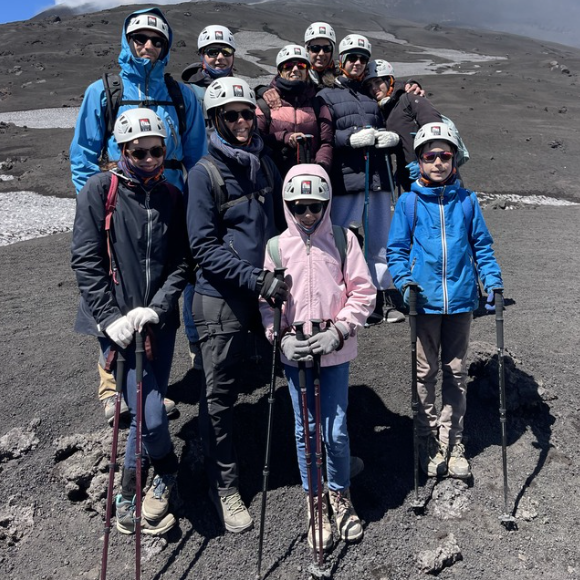
Small group (max 10 people)
Solidarity comes first. The pace is adapted to the slowest rider so that the goal is shared: everyone reaches the top with a smile.
Private Excursion
Total freedom.
The route, timing, rhythm, and physical intensity are fully customized to match your real riding level and personal goals.
Ideal for those who want a tailor-made experience, riding entirely at their own pace.
Weather conditions and volcanic activity
Weather and volcanic conditions on Mount Etna can change rapidly, even within the same day.
The day before the experience, participants receive a detailed update including weather forecast, volcanic activity status, expected temperatures at altitude, and final meeting time confirmation.
If conditions do not allow us to guarantee safety, the itinerary may be modified, the experience rescheduled, or fully refunded in accordance with safety regulations.
In case of sudden eruptive activity, routes and schedules are immediately adapted to avoid exposure.
If no safe alternative is possible, the excursion is cancelled.
Equipment provided for hiking tours
Hiking on Mount Etna involves walking on volcanic sand, ash, fractured lava, and uneven ground, often at high altitude.
For hiking experiences, Into Etna provides essential mountain equipment including a trekking backpack, protective helmet (mandatory in summit and unstable areas), trekking poles, and high-quality headlamps for sunrise, sunset, or low-light conditions, with a minimum output of 1000 lumens when required.
Depending on conditions, a light windproof or waterproof shell may also be provided.
All equipment is professional-grade, regularly checked, and specifically chosen for safety and comfort in volcanic environments.
High-ankle trekking boots are mandatory for summit hikes such as Etna Peak, Etna 3000, and Etna 3300.
Payment methods and booking conditions
To confirm a booking, one of the following options is required:
A 50 percent deposit at the time of booking, with the remaining balance paid on the day of the excursion, or full payment at the time of booking.
Accepted payment methods depend on the booking channel and are specified during the reservation process. A booking is considered confirmed once the deposit or full payment has been received.
Cancellation policy
Cancellations made by participants are subject to the following conditions:
Up to 7 days before the excursion, 50 percent of the total amount is refundable.
Up to 3 days before the excursion, 25 percent of the total amount is refundable.
Less than 24 hours before the excursion or in case of no-show, no refund is provided.
If an excursion is cancelled by Into Etna due to weather conditions, volcanic activity, or safety reasons, participants will receive a full refund or the option to reschedule the experience on a new agreed date.
General Safety
Is Mount Etna safe to visit?
Yes, when approached responsibly. Mount Etna is one of the most closely monitored volcanoes in the world. All our tours take place within officially permitted areas and are led by certified volcanic guides. Routes are continuously adapted to real-time conditions.
Do tours run in all weather conditions?
Not always. Light rain or wind may be manageable, but strong wind, storms, poor visibility, or unsafe volcanic conditions may require route changes, rescheduling, or cancellation. Safety always comes first.
What happens if the tour is cancelled?
If Into Etna cancels the tour due to weather or volcanic activity, you will receive a full refund or the option to reschedule on a new agreed date.
Are the itineraries fixed?
No. Routes, timing, distance, and altitude may change depending on weather, volcanic activity, group conditions, and safety requirements.
Who makes the final decisions during the tour?
All decisions are made on site by the certified guide and are final. This flexibility is essential when operating on an active volcano.
Experience & Equipment
Do I need hiking experience?
Yes, for most hiking tours a basic mountain hiking background is recommended. Summit hikes require good balance and confidence on uneven volcanic terrain.
Are trekking boots mandatory?
For summit hikes such as Etna 3000, Etna 3300, and Etna Peak, high-ankle trekking boots are mandatory. For lower-altitude hikes, sturdy closed hiking shoes are sufficient.
Can I rent hiking boots or equipment?
Yes. If you do not have suitable footwear or equipment, rental is available on request. Sizes must be communicated in advance.
Is hiking on volcanic sand difficult?
Volcanic sand can be tiring and unstable. Our guides choose routes carefully and set a steady pace to ensure safety and comfort.
Summit Area Tours (3000–3300 m)
Is it guaranteed that we reach the summit?
No. Reaching the maximum altitude depends on volcanic activity, weather conditions, and official restrictions. Safety regulations always override objectives.
Are volcanic gases dangerous?
Volcanic gases may occasionally be present and can cause mild irritation. Routes are adapted to avoid exposure, and guides monitor conditions constantly.
Are these tours suitable for everyone?
No. Summit tours are for active participants in good health. They are not suitable for people with serious respiratory or cardiac conditions.
Practical & Booking Questions
How many people are in a group?
Group size varies by experience. We keep groups small to ensure safety, quality, and minimal environmental impact.
Is a private tour safer?
Private tours allow more flexibility in pace and timing, but safety rules and guide decisions remain the same.
What languages are tours conducted in?
Tours are available in English, Italian, and French, depending on availability.
How fit do I need to be?
You should be comfortable with outdoor activity for several hours. The required fitness level depends on the specific tour.
Can I bring my own equipment?
Yes, provided it meets safety requirements. For some tours, specific equipment (such as high-ankle boots) is mandatory.
Health-Related Questions
Are there medical restrictions?
Yes. Tours are not suitable for pregnant participants or people with serious heart conditions, severe asthma, or epilepsy. Any medical condition must be declared before booking.
What if I feel unwell during the tour?
Inform the guide immediately. Routes and pace can be adapted, or the tour can be stopped if necessary.
Final Note
These FAQs are designed to provide clarity before booking and to set realistic expectations. On Mount Etna, flexibility, awareness, and respect for nature are part of the experience.
Services included
- Certified Volcano Guide
- Safety Helmet
- Hiking Poles + Light Wind/Water Proof jacket
- Backpack
- Neck-warmer (sand/wind/gas)
- Trekking Shoes
- Cable Car
- 4×4 only way up
Special on tour
Reviews